My first weeks at university
More and more students are the first in their families to attend university. Gil Keppens believes this group needs more attention. ‘These young people sometimes need an extra push not only to get in, but also to stay.’
I still remember my first weeks at university as if they were yesterday. I missed my very first lecture because I couldn’t find the building. The campuses were scattered across the city, and I stubbornly found myself searching in the wrong place. It wasn’t until my second lecture that I found the right classroom.
The instructor told me the syllabus was on the digital learning platform and that we had to read a text for the next lecture. I nodded obediently, but had no idea where to begin. Afterward, I saw fellow students walking forward to ask questions; I stayed put, afraid of saying something stupid. That first year wasn’t a great success.
All of this happened seventeen years ago, when I was one of the first in my family to go to university. But my experience isn’t at all unusual. More and more young people are finding their way to higher education. That’s a positive development: studying has become a natural progression for many eighteen-year-olds. But this growth also means that more students are entering the university without anyone around them who has been able to explain how it works.
This is a rotating column from the Tilburg Young Academy (TYA). Each month, a different TYA member highlights developments in the academic world.
In research, we often refer to this group as first-generation students: young people who are the first in their families to attend university. I personally don’t like using that label because the group is much more diverse than the term suggests.
These are young people from families where studying isn’t a given, sometimes with a migration background, but who are primarily flexible due to limited familiarity with higher education. For example, because their parents haven’t studied themselves, because there’s little understanding of academic expectations at home, or because practical barriers such as working alongside school, caring for family, or financial worries play a role.
What they have in common is that the step to university feels more daunting. They can’t turn to their families with questions about how to study, what workload is feasible, or how best to communicate with lecturers. They have fewer role models to follow. And they sometimes feel different from students for whom studying is the most natural thing at home.
This theme also recurs in my course on the sociology of education, and time and again, I see how relatable this is for some of our own students: they feel that distance, that searching. Research also shows that they often have other reasons for studying.
While many students continue their education primarily out of interest, first-generation students usually hope for social advancement. They want to achieve something their families haven’t achieved before. This provides motivation, but also pressure: you don’t want to disappoint anyone, especially when others around you look up to you as a role model.
As a university, we have every interest in supporting these students as well. Our tradition, like that of Cobbenhagen, reminds us that a university should be more than a factory that dispenses degrees. We educate young people who will later actively participate in our society. In Tilburg, we call that: knowledge, skills, and character.
That’s why I’m making an appeal. Let’s make Tilburg University a place where all students feel welcome, including those for whom the step to university wasn’t so obvious. Young people who sometimes need that extra push not only to get in, but also to stay.
Through this column, I’d like to offer my support to think about how we can strengthen this together. A university only belongs to everyone when every student, regardless of background or preparation, can feel at home here.
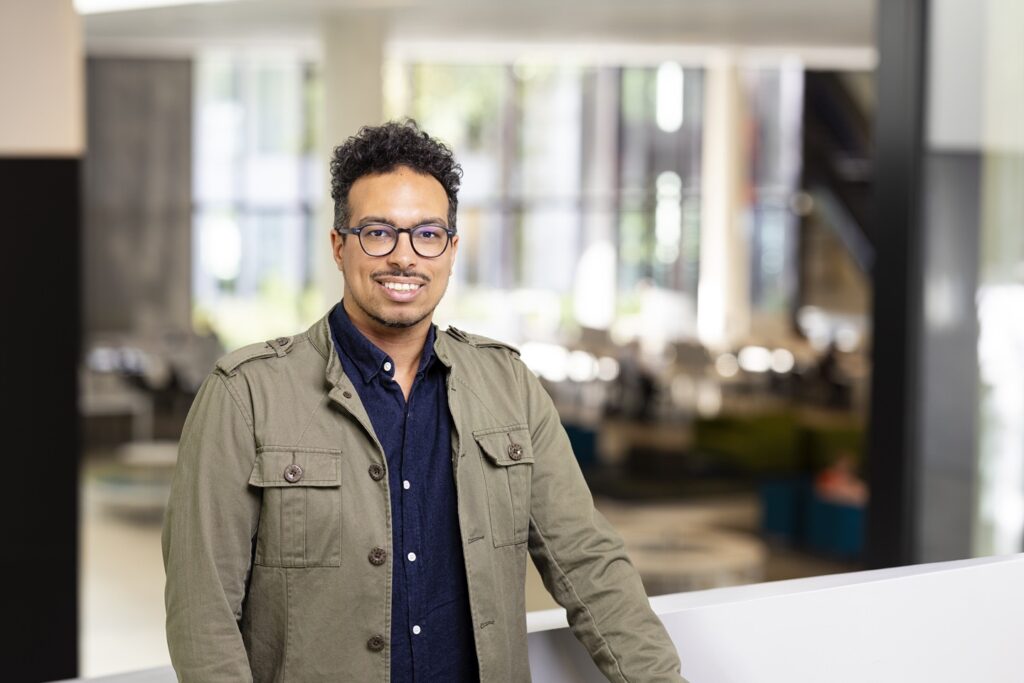
Gil Keppens is assistant professor at the Department of Sociology and program director of the Tilburg Center of the Learning Sciences (TiCeLS). His research focuses on understanding and explaining educational inequality.
Advertentie.