The fact that soldiers also suffer mentally is not reflected in the recruitment of the armed forces
The armed forces recruit young people with commercials about the tough work of a soldier. But especially in wartime, soldiers’ lives also have a downside of physical and moral suffering, as chaplain Sanneke Brouwers shows with her PhD research among veterans.
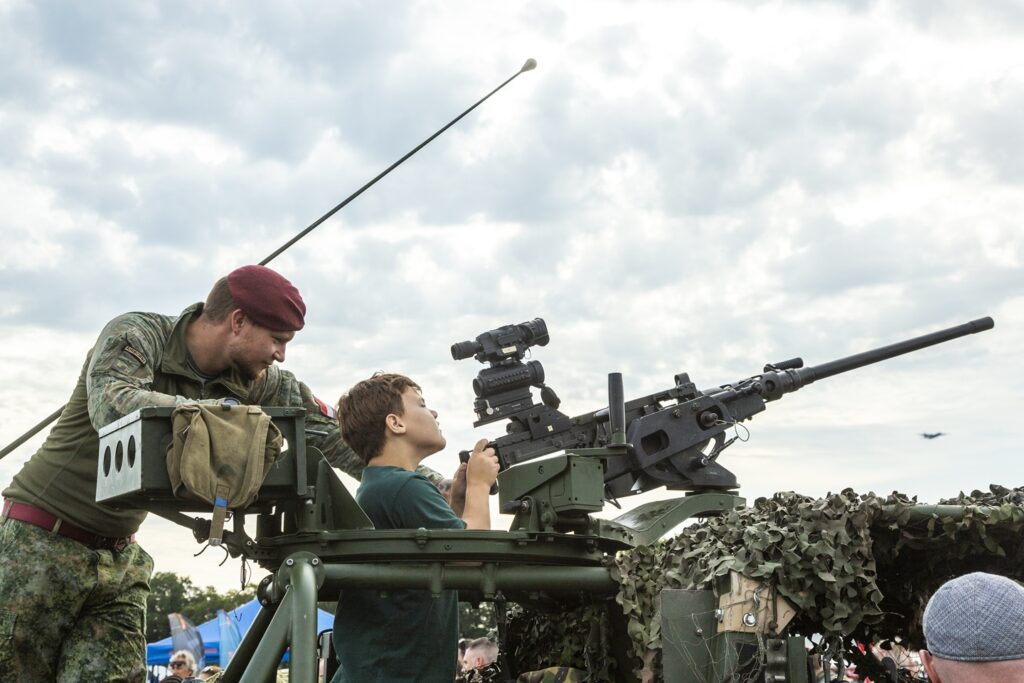
On the website ‘Working at the Ministry of Defence’ we see young people in uniform looking confidently into the camera. They perform tough tasks and stand smiling and shoulder to shoulder in a group portrait, under the motto ‘friends for life, 365 days of getting the most out of yourself, breaking down and moving on.’
Contrast
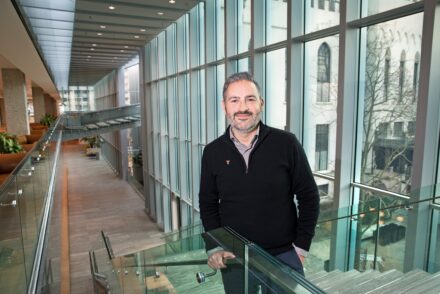
The contrast is great with the research of Sanneke Brouwers, about experiences that are not visible in the commercials and in the photos: ‘moral suffering’ and conscience trouble. Brouwers, who in daily life is chaplain at the Education and Training Centre of the Engineers in Vught, received her doctorate at the beginning of December on the subject of ‘moral experiences’ in the armed forces at the theological faculty.
It is important to address moral experiences, Brouwers argues in her dissertation, because many soldiers who return from deployment missions abroad have had to deal with issues of conscience, and they often do not feel supported by society. Mapping these experiences ‘contributes to the development of a moral care offer.’
Different time
Since the 1960s and 1970s, especially in higher-educated circles, ‘playing soldier’ was considered a job for docile people who have not learned to think for themselves. Brouwers started her research into ‘moral ambivalences in the armed forces’ eight years ago, at a time when that negative image of the role of the army was still leading.
‘In the meantime, I have revised some older texts. At that time, I still wrote sentences like: the armed forces operate on the margins of society and are an unimportant institution. That image has been overtaken by current events. The position of the armed forces and the recognition of veterans have really changed completely.’
Rambo
‘And you also see the commercials change over time. Where the Ministry of Defence used to focus on excellent candidates, with the theme ‘suitable versus unsuitable’, it now opts for an approach that everyone can identify with. ‘I think that broad approach is positive. Because it doesn’t just appeal to Rambo-like types, and that makes the armed forces stronger and more versatile,’ says Brouwers.
However, the recruitment campaigns show little or nothing of the moral suffering from her research. ‘And I understand that, because you don’t want to scare recruits too much,’ says Brouwers. Young people are more likely to be attracted by energetic peers or perhaps by sailing on a submarine, flying an F35 or shooting with high-tech weaponry.
No war, but no peace either
Themes such as national defence and conscription are once again high on the agenda of politics and the media. This is due to the growing concern about Europe’s security and the threat of war with Russia. ‘It is not a war, but it is not peace either,’ a nationally distributed brochure from the Ministry of Justice and Security states.
So, the Ministry of Defence recruits personnel with a positive message. But as soon as war really breaks out, that positive image can change. Because the main goal of the Armed Forces is of course to be prepared for a war, with all the accompanying misery, human suffering and unexpected moral issues. And then it is not so much about the confrontation with the other party: ‘As a soldier, you can expect the enemy to attack you. That’s what you’re trained for,’ says Brouwers.
You don’t count on your own
The point is that individual experience can be at odds with the mores of the armed forces. In her dissertation, Brouwers describes moral suffering as a state of mind in which you ‘act in a way that goes against your own personal and professional values, which undermines integrity and authenticity.’
Society requires young people to learn to think and act independently, but: ‘in the armed forces you are always in a group. You don’t count on your own. Your interest is always subordinate to the group interest. That is a really important lesson, that responsibility towards each other is very crucial.’
Knife in the back
Soldiers can therefore get tangled up with themselves. ‘Moral suffering arises from situations in which the experiences of an individual soldier clash with those of colleagues or of a superior.’
Brouwers: ‘In combat operations, for example, you are extremely dependent on your unit, and if you are isolated, that mutual trust can be seriously dented. And sometimes that feels like a knife in the back. That can have a very deep impact on morale and the feeling of safety.’
Veterans returning from a mission often recognize themselves in such situations. And it is important for the Ministry of Defence to pick up on such signals. ‘The first step is to map out those experiences, such as conscience distress among veterans. My research contributes to that. Such experiences also remain very abstract for managers and for outsiders.’
Plea
‘Questions about the deployment of Dutch soldiers, security in the Netherlands and the world, justice and human dignity concern us all,’ Brouwers argues. ‘That is why I propose not to leave the moral questions with the individual soldier alone, but to be able to share them with society, so that veterans do not have to bear those moral burdens alone.’
Advertentie.