Iranian staff in Tilburg follow the struggle against the regime: ‘We are more hopeful than ever’
The war and unrest in Iran are gripping the world, but for Iranians living in the Netherlands the news is deeply personal. Two Iranian employees of Tilburg University are closely following developments in their home country. “It goes beyond what a human being can process.”
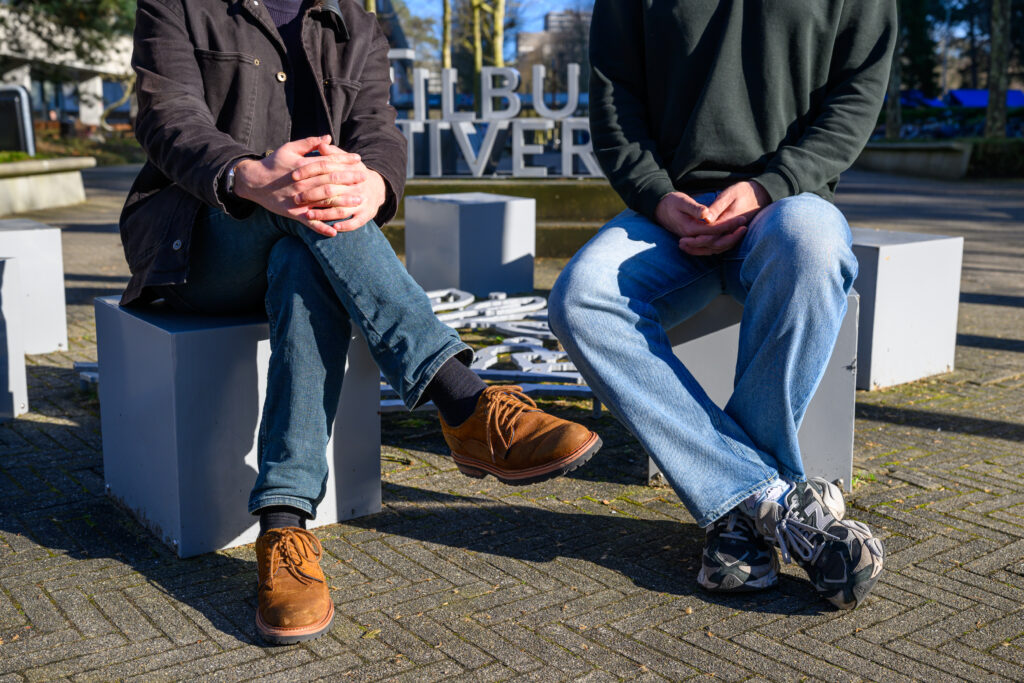
The war in Iran has the world on edge. While activists such as Greta Thunberg strongly speak out against the war, the situation feels different for two Iranian employees at Tilburg University, who share their story anonymously for safety reasons. “What is our alternative?”
Since the outbreak of the war, the Iranians say they have felt “a mix of concern and hope. We are more hopeful than ever, but that also makes it frightening,” they explain. “We hope that 47 years of terror by the regime will finally come to an end.” They are certainly not saddened by the death of Iran’s Grand Ayatollah Ali Khamenei: “One of the bloodiest dictators in almost all of history.”
“It was less than two months ago that the regime carried out a massacre during protests. That is still very vivid in my mind and in our collective memory, which is why we asked for foreign help. Even though we were unsure what that help would look like and we are not necessarily in favor of war,” one of the employees explains.
He continues: “We are not naïve. What Trump and the United States are doing also serves their own interests, and war always comes with major human losses. But we can share a common interest: that the regime leaves. The regime could have surrendered. They did not. They chose their missile programs.”
Selective activism
“You can criticize war, you can be concerned,” the two Iranians say. “But many famous activists remained silent before, during the protests for example, and are suddenly speaking up now. That does not feel right. That is selective activism.”
“For instance, the media and activists immediately reacted to a school that was allegedly bombed by the United States and/or Israel. But we still do not know who was responsible or whether it might have been a military school. Iran has sent rockets before that ended up landing in its own territory.”
“Moreover, the regime deliberately builds military bases next to schools. That is not a coincidence. They also hold press conferences in schools and hospitals. That is similar to what Hamas did in Israel.”
North Korea on steroids
There is still a great deal of fear among Iranians. If the hardline policies of the late leader Ali Khamenei continue, the employees fear the government will respond with extreme violence against its own population. One of them calls it “North Korea on steroids.”
The regime has asked residents to leave the Iranian capital Tehran because of the war, but most people are staying. “They expect that if the regime becomes weak enough, they will have to finish the job,” the employees explain.
Many videos also show residents in Tehran cheering in the streets or shouting out of their windows in relief after the death of the Grand Ayatollah. But that remains dangerous. “We have even seen videos where the regime shoots at the windows,” the employees say.
Bloody protests
The fear of the regime is understandable. New videos of the regime’s brutal actions during the massive protests of recent months are still emerging. The number of deaths during those protests rose dramatically.
It is estimated that more than 30,000 residents were killed on January 8 and 9 alone. For a long time the exact number remained unclear, partly because the regime blocks internet access for residents, preventing them from sharing information or videos.
“There is a very well-known video of a man searching for his son. He films a long row of dead bodies while walking past them. The video lasts ten minutes, just imagine how many bodies he passes in that time. At the end, he still has not found his son.” The employees become visibly emotional when talking about it. “It goes beyond what a human being can process,” one of them says.
These videos function as a form of collective memory, the Iranian employees explain. Almost all Iranians have seen this video, but there are many more. They turn numbers into people.
State propaganda
For years, the regime has tried to mislead citizens with propaganda, the employees say. “During protests, for example, they send people undercover. These agents might start smashing a car, so the regime can claim the protests are violent and justify cracking down. Hamas did that as well. Khamenei adopted many of their tactics.”
These agents belong to the IRG, the Islamic Revolutionary Guard. “You could compare it to the SS,” the employees explain. “The power of the regular army has been systematically reduced, while the IRG is better funded. As a result, we no longer have an army that protects the people.”
Survivor’s guilt
Iranians live all over the world but remain strongly connected to their homeland, which has been in turmoil for years. Although the Tilburg University employees no longer live in Iran, they follow the news closely. “We have a strong sense of collective responsibility.”
“A few weeks ago the situation there really affected my work and relationships,” one of them says. “I tried to ignore the news and just live my life. I managed for one day. Then I immediately felt an enormous amount of guilt. Survivor’s guilt.”
Support from the university
In 2022, when there was also major unrest and violence in Iran, Iranian students said they did not feel supported by the university. How is that now?
“After the protests we were immediately contacted by members of the university board. For example, they are working on a solution to postpone tuition payments. Both students and employees are now being listened to,” one of the employees says.
Future
Despite all their concerns, the employees say they see a small glimmer of hope for the first time in a long while. “I am optimistic that the regime will eventually fall. The stakes are now so high,” one of them says.
And that desire for change does not come out of nowhere. Iran has a civilization that stretches back thousands of years; at one point, one of the world’s earliest human rights documents was even created there.
Throughout history, the country has endured major conquests and destruction, from Alexander the Great to the Arab invasions during which libraries were burned. Yet the country managed to rebuild itself time and again.
Even now, many Iranians draw strength from their own culture, history, and mythology. Old symbols and flags, stories of cruel rulers and people rising up against them, are reappearing in public debate and in protests.
They express a longing for something fundamental: the restoration of the rights that have been taken from them, and the possibility of reclaiming their ordinary lives.
Advertentie.