Iris Barbu on algorithms: “I see more funny videos than serious news content”
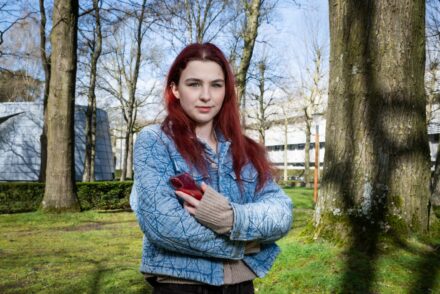
Algorithms guide us through the endless maze of the internet. Sometimes they show you exactly what you find interesting, and other times you miss information on your feed. This month, we dive into the bubble of Romanian student Iris Barbu (19), who is pursuing a Bachelor’s in Psychology.
What stands out to you most about algorithms?
“I shop online a lot. When I’m considering buying something, I look it up. Then I go to a completely different website, but I keep seeing ads for those exact products—sometimes even for months.”
Are you in a filter bubble that mainly reinforces your own views? Do you try to get out of it?
“On social media like Instagram and TikTok, I’m definitely in a bubble. My feed mainly consists of content about hobbies, food, and artists. Facebook and LinkedIn show more content related to psychology. I don’t really understand why the algorithms differ so much.
“Sometimes I try to escape these bubbles on Instagram, TikTok, and Snapchat, but I can’t seem to manage it. Instagram has a button that lets you reset your algorithm, but it doesn’t seem to work.”
What would you prefer not to see online?
“I have a negative view of content from the manosphere. For example, I don’t want to come across videos by Andrew Tate. Luckily, I never see his videos, but that’s also quite strange. He has been arrested multiple times in Romania, the country I’m from. I know that teenage boys here are exposed to this kind of content online.”
Has your online experience changed since moving to the Netherlands?
“Definitely. I’ve been living in the Netherlands since August last year, and I’ve noticed a clear shift online, especially in the ads I see. Almost all advertisements are now in Dutch or English and focus on Dutch topics, like supermarkets or shops.
“That shift happened gradually. For example, when I spent three weeks on vacation in the United States, I didn’t notice any changes. But now that I’ve been living somewhere else for a longer period, my algorithm has changed—especially on YouTube. I now get Dutch ads there as well.”
Do algorithms influence your online experience positively or negatively?
“I think it’s somewhere in the middle. On the one hand, I enjoy content I like watching—often funny videos, for example about animals. On the other hand, I would like to see more serious content, like what’s happening in the world. I want to follow the news, but it doesn’t show up on my feed.
“For example, I rarely see content about economic developments or jobs changing due to AI. My mother sends me posts about that, but they don’t reach me through algorithms. It doesn’t happen automatically—I really have to look for it. When I do, I can find that content, but ideally I’d have both.”
Do you have a good tip for being less influenced by algorithms?
“I use the language app Duolingo, and it recently introduced a feature that lets you set how long you want to spend on an app each day. For example, if you limit yourself to half an hour on Instagram, Duolingo will show a pop-up after that time, asking you to complete two language lessons. Every time you reach that limit again, the pop-up reappears. It helps me be more mindful of how I spend my time.”
Advertentie.