Severe weather has been forecast. What now?
A surprising amount of research starts with something very simple: the news of the day. A heatwave in Europe. Flooding in Taiwan and Japan. Deadly rainfall in Ghana and Côte d’Ivoire. The news mainly shows us what goes wrong. But behind it lies an equally interesting question, writes Thomas Breugem. ‘What did we actually know beforehand, and what could we have done with that knowledge?’
Thanks to more accurate measurements, better models and advanced warning systems, we are becoming increasingly capable of predicting risks such as extreme heat, heavy rainfall and flooding. That is a major scientific achievement. But a good forecast is not yet a good action plan. What do you do next? Who makes a decision, based on what information and at what point? And what role can science play in this process?
Extreme weather rarely comes completely out of nowhere. In the Netherlands, we are familiar with warnings issued by the Royal Netherlands Meteorological Institute (KNMI). Other countries have warning systems too, sometimes providing signals days in advance. In Taiwan and Japan, warnings were issued for heavy rain, flooding and landslides. In Ghana, the meteorological service warned of heavy rainfall. How accurate and useful such forecasts are varies considerably from one region to another.
But a warning alone is not enough. Who do you warn first? What assistance do you start organising in advance? And how much uncertainty are you willing to accept before taking action? Act too early and you may later be accused of overreacting. Wait too long and you lose valuable time to limit damage and human suffering.
That is precisely why turning forecasts into action requires multidisciplinary thinking. Meteorologists, hydrologists and climate scientists can help us understand risks better. But after that comes an equally complicated task. It involves logistics, funding, local vulnerability and decision-making under uncertainty.
This is a rotating column from the Tilburg Young Academy (TYA). Each month, a different TYA member highlights developments in the academic world.
At the Zero Hunger Lab, we work with organisations such as the Red Cross and the World Food Programme on these kinds of questions. In the humanitarian sector, this is known as anticipatory action: taking action before a disaster strikes, based on a forecast. This might involve warning communities, pre-positioning relief supplies or making funding available earlier.
That may sound straightforward, but the trade-offs are complex. A truck, staff member or euro that you allocate to a disaster that may happen cannot be used for a crisis that is already taking place. Our research looks at how organisations can make such choices under uncertainty and how different sources of information can help identify risks both earlier and more accurately.
To me, this shows just how closely current affairs and scientific research are connected. Universities cannot solve societal problems on their own. But they can help us understand them better and make better choices possible.
And this applies to more than extreme weather. Across the university, researchers are working on issues that make the news every day: from food security and health to technology, education and inequality. Behind almost every news story lies a research question. There is a good chance that someone at the university is already working on it, or would be happy to think it through with you.
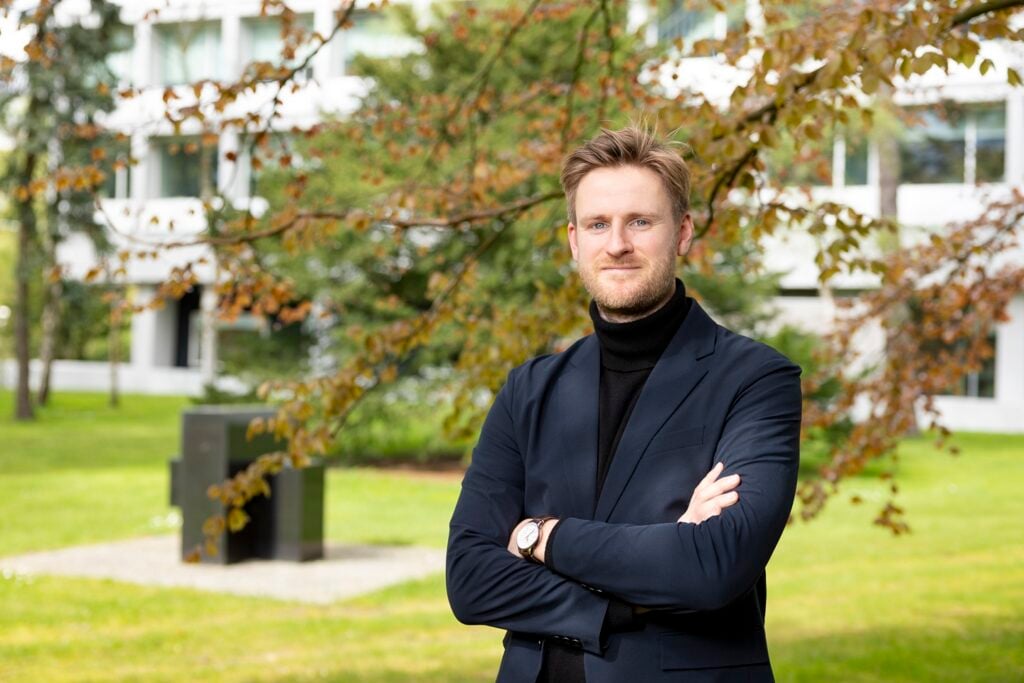
Thomas Breugem is Associate Professor of Operations Management at Tilburg University and affiliated with the Zero Hunger Lab. His research focuses on strategic trade-offs involving scarce resources, uncertainty and fairness, including in humanitarian aid, healthcare and logistics.
Advertenties.