‘Israel wants to destroy our hope and nationality’: Gazan journalist shares his story in Tilburg
How do you report on a war when you yourself are under fire? The documentary Inside Gaza follows journalists who risk their own lives to document the stories of people in Gaza. On Wednesday, one of them, Adel Zaanoun, was in Tilburg. ‘Share the stories from Gaza. By doing so, you support Palestinian civilians.‘
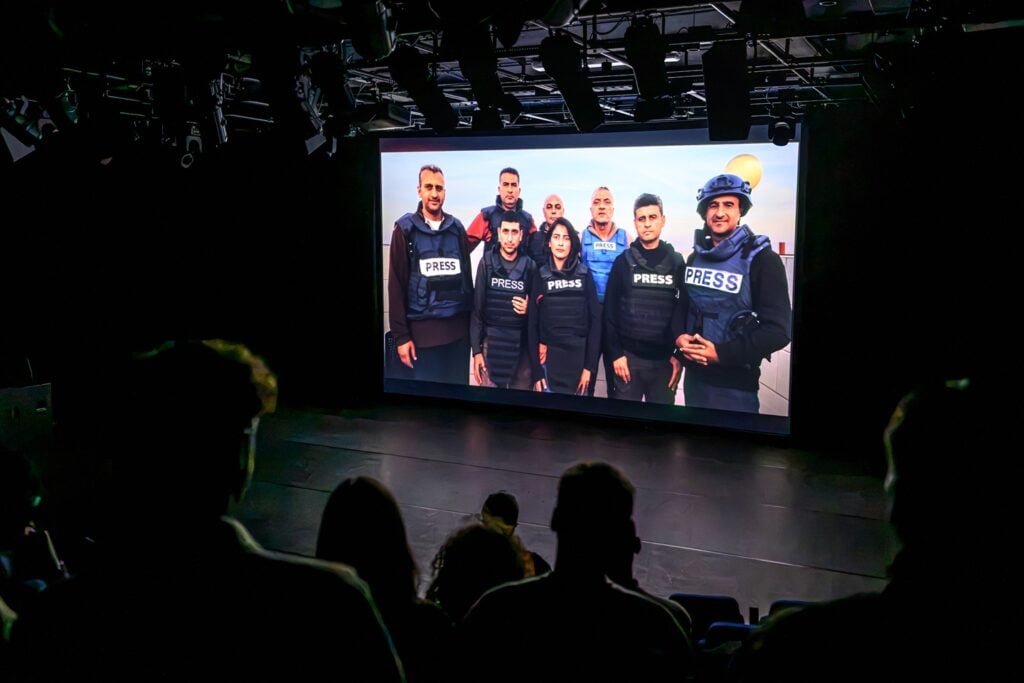
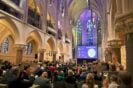
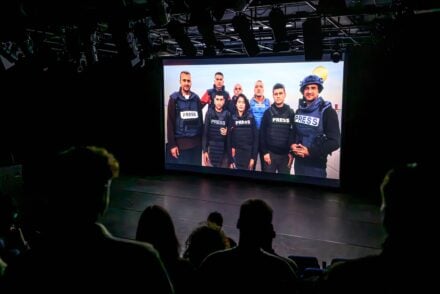
Many have already put in a long day of work or study by the time they walk into the small hall of the Schouwburg on Wednesday evening. Some have been retired for a while, while others are still in the midst of their student years—including students from Tilburg University. What brings them all together tonight? The award-winning documentary Inside Gaza, followed by a discussion with journalists who are documenting the conflict from up close.
Through exclusive footage, the documentary reveals the immense difficulty of reporting on a war while under fire oneself. Journalists must contend with propaganda and restrictions that hinder their work, all while facing a constant threat to their own lives and the lives of their families.
Since the Hamas attack on Israel on October 7, 2023, and the subsequent Israeli military operations, the international press has been denied free access to the Gaza Strip. The reporters from the Agence France-Presse (AFP) bureau in Gaza City – who are followed in the documentary – are among the few able to cover the war from the inside.
Inside Gaza
The documentary, which follows journalists during the first months after October 7, begins with footage of life in Gaza before October 7, 2023, Palestinians still visiting the beach, happily eating ice cream along the promenade. In a single day, that life changes drastically.
The footage that follows shows bombardments, the wounded, and parents rushing their children to the hospital in a state of panic. The pain, disbelief, and fear are etched onto their faces. Women weep for deceased family members; men seek solace in each other’s arms. AFP journalists capture it all, at the risk of their own lives.
The documentary also captures the silence that follows the bombings: homes reduced to rubble, streets strewn with debris, and people desperately searching for food, water, their belongings, or their loved ones. In the theater, the audience watches the screen, breathless. The images leave little room for words.
Journalists are not merely witnesses; they are also targets. The documentary reveals how they attempt to continue their work even as their offices, equipment, and means of communication are deliberately destroyed.
Proof
The reporting itself is also being contested. The Israeli government casts doubt on the authenticity of the footage, suggesting that Hamas has manipulated it. For instance, photographs of Palestinian victims are called into question, with claims that the victims shown are not real people, but dolls.
And this appears to be having an effect. Foreign media outlets want to verify whether the bodies are real, asking journalists for proof. The documentary illustrates how propaganda and disinformation undermine the work of journalists. precisely at a time when they are striving to reveal the reality on the ground.
One of the most harrowing scenes follows a young boy searching among the bodies for his sister, Musk, whom he adores. Eventually, he finds her beneath a sheet. The boy cries out her name ‘a voice that could make a stone weep,’ says the journalist who captured the moment.
Working under threat
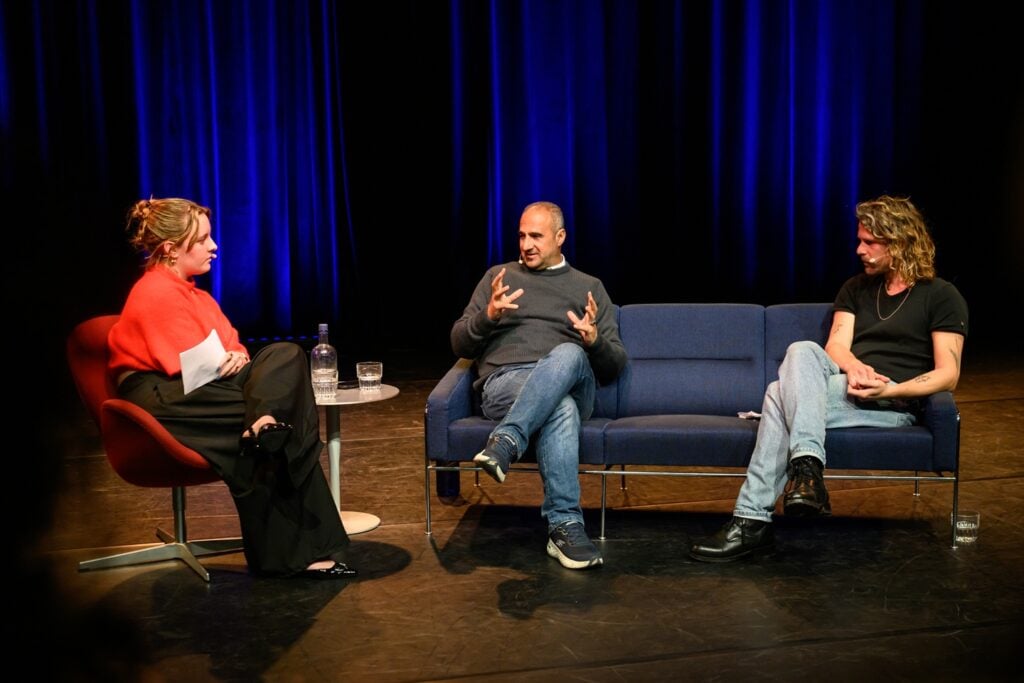
Following the documentary, Adel Zaanoun and Jules Swinkels will join a panel discussion at the theatre (Schouwburg). Zaanoun, who served for many years as the head of the AFP bureau in Gaza, is himself one of the journalists featured in the film. Swinkels, a senior researcher at Free Press Unlimited, shares insights into the experiences of journalists, including those working in the West Bank.
Zaanoun, who now lives in Cyprus, has watched the documentary only once. ‘I don’t want to be constantly confronted with the terrible memories from Gaza,’ he says.
He describes the restrictions faced by journalists in Gaza, such as the prohibition of equipment, safety vests, and helmets. Bombardments occur everywhere and incessantly. The price of a mobile phone has increased fivefold, and there is a shortage of almost everything. With the limited resources they have left, journalists are doing their best to document the suffering of the people in Gaza.
Drones and the control over mobile networks also make the work dangerous. Zaanoun notes: ‘Journalists can easily be tracked. Moreover, the pressure goes beyond the physical danger: they (Israel, ed.) want to destroy our hope, our very identity.’
‘Share the stories from Gaza’
Swinkels emphasizes the importance of taking a critical look at news coverage and the narratives being circulated about Palestinian journalists. He describes a major disinformation campaign, explaining: ‘Accusations that journalists are terrorists are sometimes spread via social media and other channels without any thorough verification.’
He also points to the double standard applied when evaluating journalists. According to him, Palestinian reporters are often expected to appear completely objective in order to be considered credible: ‘Even though their vulnerable position and the circumstances in which they work are barely taken into account.’
Towards the end of the discussion, a question comes from the audience: ‘What can we do?’ Zaanoun replies that sharing stories makes a difference. ‘Retweet, repost, share the stories coming out of Gaza. In doing so, you are supporting Palestinian civilians.’
The screening of Inside Gaza and the subsequent discussion were organized by T*Agency, the youth platform of Schouwburg & Concertzaal Tilburg, in collaboration with Fontys Journalism.
Advertentie.