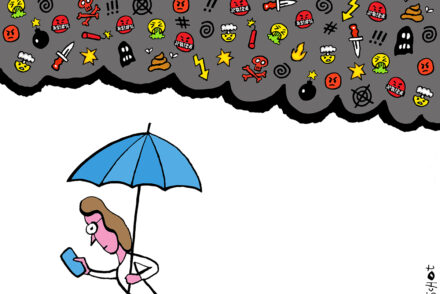
Data centers eat up the space and energy meant for Dutch homes
Dutch housing plans are stuck: the grid is full, space is scarce, and nitrogen rules limit construction. Yet American tech companies keep building energy-devouring data centers, writes Yeşim Topuz. ‘It feels like Europe’s digital future requires sacrificing housing and energy needs.’

Some might blame it on the internationals, others on migrants, but what about the data centers?
The Netherlands has had housing issues for a hot minute. To solve this, they must build about 900,000 new homes by 2030. However, the progress has been slow due to environmental regulations. One of these concerns is nitrogen regulation, where new projects must ensure they won’t increase nitrogen emissions.
More specifically, plans to build 30,000 homes in Amsterdam are threatened because there simply isn’t enough grid capacity to connect them to the power network. Citizens have become frustrated with the situation because this stalling does not affect the building of massive data centers for American tech companies.
Not only that, these hyperscale data centers compete with housing for physical land, and the Netherlands has already had issues with finite resources. The municipality of Amsterdam has emphasized that space is scarce for both home construction and the electricity networks.
To make it more concrete, a single 10-hectare data center takes up the equivalent of 15 standard soccer fields. This is space that could otherwise be easily utilized to build residential housing, including roads, gardens, and more. On top of that, the energy consumption of these data centers last year equaled that of almost two million homes.
In the U.S, there has already been public backlash against data centers due to their energy and water consumption. This won’t be different for the Netherlands and Europe generally. For example, in Haarlemmermeer, a city in North Holland, residents strongly oppose and are upset that the data centers are being built directly behind their homes. Or in northern Italy, where locals are rising up against a new Microsoft project that will permanently transform agricultural land, alter the landscape, and cause irreversible damage. And this local frustration connects back to a broader trend of public opposition across Europe.
Nonetheless, the European Commission plans to triple the bloc’s data center capacity within seven years to close the gap with the U.S. and China on AI.
How is it possible that housing cannot be built while in Amsterdam, a massive data center is being built for the American Microsoft? Citizens are directly competing with AI for their most basic needs. It feels like Europe’s digital future requires sacrificing housing and energy needs to power American tech giants. Who is this technological progress truly for?
Yeşim Topuz is a bachelor’s student in International Sociology at Tilburg University.
Advertenties.