More than decoration: what does Tilburg University’s art collection tell us?
From religious statues to abstract sculptures, Tilburg University’s campus is filled with art. But what kind of art collection has the university assembled over the past hundred years? As the university prepares to celebrate its centenary in 2027, Maartje van den Heuvel takes a closer look at the collection.
Upon entering Tilburg University’s campus, it is immediately apparent that the university has a distinctive approach to art. The characteristic architecture of striking buildings such as the Cobbenhagen Building and the Academia Building, together with the old trees on the leafy campus, gives the place a distinct sense of place.
You are also welcomed by an array of sculptures that immediately makes you realise you are at a university where people think, work and create with a sense of beauty, harmony and inspiration.
QR codes invite you to explore the artworks in greater depth. Tilburg University’s website makes it clear that the artworks are not there merely for decoration. Together, they transform the campus into a Denkraum, a space for thought that invites reflection. How fortunate students, lecturers, researchers and staff are to be able to work in such an inspired and inspiring environment.
That sense of happiness is also evident among the people who come to collect or return artworks at the art lending library. You enter into an encounter with a work of art and develop a bond with it. People visibly delight in the richness of colours, feel inspired by a depiction or lose themselves in a moment of contemplation.
This approach to space as a source of inspiration, with artworks serving as landmarks, conversation pieces or vehicles for ideas, fits with Tilburg University’s Catholic roots. I believe this is the first time in my career that I have quoted the Pope in an article. But because his ‘reel’ reached me through the Instagram account of one of the Netherlands’ leading designers, Irma Boom, his statement also acquires cultural relevance in the Netherlands.
In response to discussions about AI-generated art, Pope Leo XIV emphasised that art – provided it is authentic – is not a secondary concern. On the contrary, as he states, art is ‘a fundamental place for listening, where you can learn about humanity’s aspirations and wounds, its thirst for beauty, justice and peace, and its search for meaning’. Tilburg University’s Catholic roots are also reflected in its embrace of this view of art.
Various movements and characteristics can be distinguished in Tilburg University’s artworks, which together define the nature of the university’s art collection. Seven characteristics will be explored in the coming period – around the time of the centenary – through seven exhibitions in the Cobbenhagen Building, under the series title Enlightened and Interwoven.
During 2027, two exhibitions will be devoted to two monumental art projects that are currently being prepared. Commissioned by Tilburg University especially for its centenary in 2027, these projects will serve as lasting reminders of the relationship between the university and the city of Tilburg, and thus between science and society.
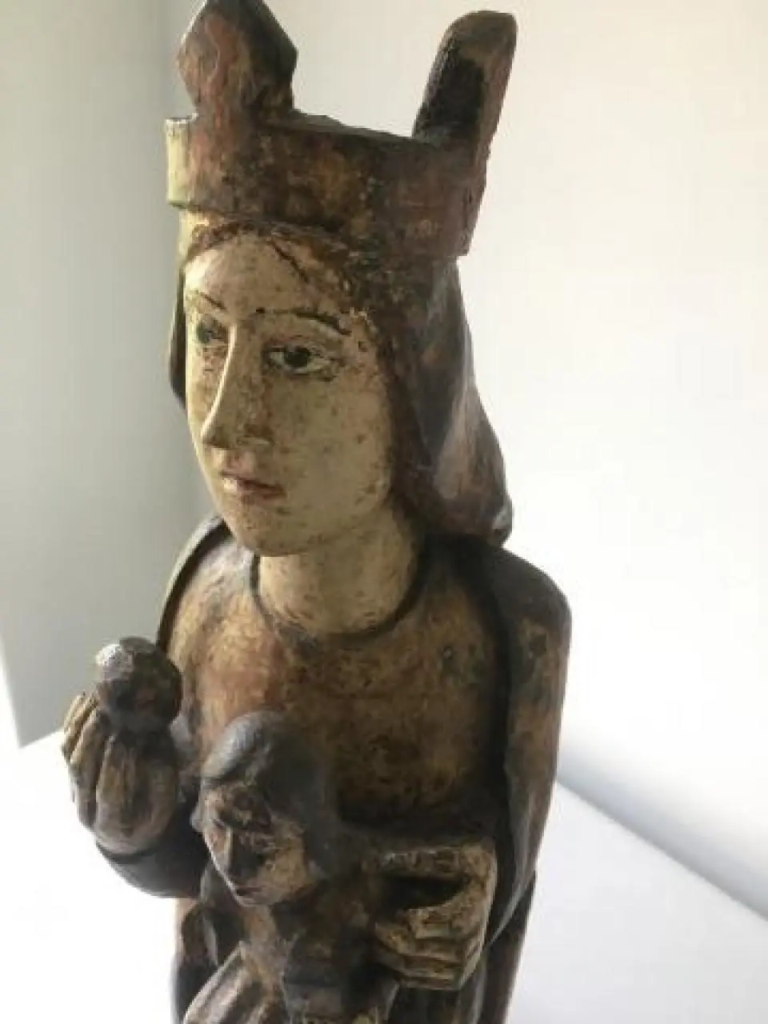
First, there are works that can be grouped under the working title ‘Spiritually Inspired’. They make Tilburg University’s Catholic background explicitly visible. The iconic statue of the Sedes Sapientiae, Mary with the blessing Christ Child as the source of wisdom, is a striking example. It is perhaps the most characteristic artwork at Tilburg University.
Corpus Christi, as well as modern works such as Gijon: Cena in Emmaus by Erwin Olaf and the staged photograph Bread/Wine by Margriet Smulders, also draw on this religious tradition and, above all, breathe new life into it.
Scale and material form a second characteristic, visible in the large abstract and geometric works. Artists such as Arie Berkulin (Try, 1986, near the Cobbenhagen Building) and Ron van de Ven (In diepte, 1992, near the Tias Building) seek to understand the laws governing materiality, forces and proportions in the universe, and to convey something of these to the viewer.
This reminds us that science and the arts pursue related goals: exploring our place in the universe and the laws that govern it.
An interest in the human side of existence, in vulnerability and the human condition, also fits with the university’s Catholic background. In a highly recognisable style, Rien van den Brink’s artworks explore the human form and soul. Although they are not always cheerful, they are particularly popular at the art lending library. Apparently, his images evoke a sense of recognition.
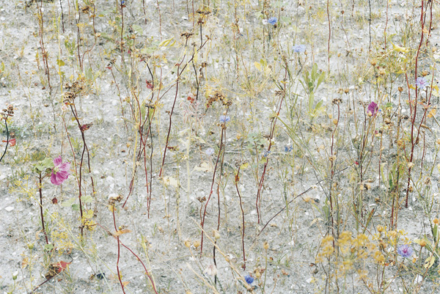
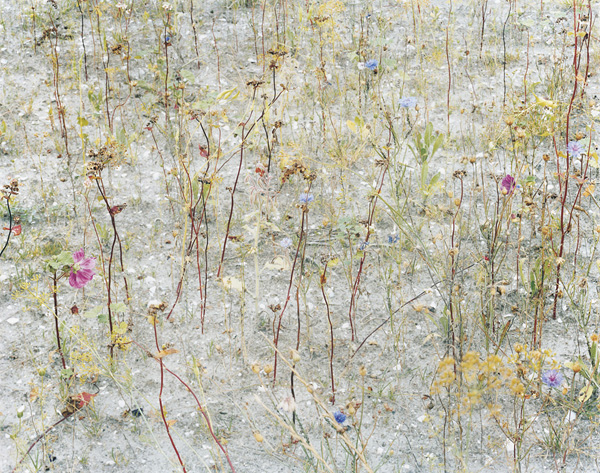
The principle of Natura Artis Magistra – nature is the teacher of art – is expressed in works that focus on the study of and reverence for nature. Pure admiration for the delicate forms of a web of flowers – on the grounds of the well-known alternative hippie enclave Ruigoord near Amsterdam – can be found, for example, in works by Wout Berger.
Textiles and interweaving form another characteristic. Works made of textiles and woven fabrics often demonstrate a particular sensitivity to materials. But interweaving also has a figurative meaning: it refers to the connection with the surrounding geographical area, Tilburg and its environs, a region with a rich history of weaving mills and textile culture.
Works dealing with honour and conscience, often grouped under the heading of socially engaged art, address themes such as ethics and social concern about injustices or a lack of humanity. Finally, there is the category with the working title ‘In Academia’. Artworks such as portraits and busts, as well as photographs, together form a kind of gallery of honour commemorating people and moments from the university’s own history.
Besides providing the selection criteria and working titles for the upcoming exhibitions, these groups will also form the intended chapters of a book bearing the same title, Enlightened and Interwoven. Through a selection of the most remarkable artworks, this collection book will highlight the character of the collection and make Tilburg University’s Denkraum visible: a space in which ideas take tangible form as works of art. To mark the centenary, the book will bring together a hundred years of art history, thereby helping to keep Tilburg University’s intellectual heritage alive.
For more about art at Tilburg University, see: Art on campus and the Art Lending Library.
Maartje van den Heuvel is coordinator of Tilburg University’s Art Lending Library.
Advertenties.