Migrants are mistreated at Europe’s borders, but who takes responsibility?
When migrants are illegally pushed back at Europe’s borders, it is often unclear who is responsible. That question lies at the heart of Mariana Gkliati’s research into the EU border agency Frontex. ‘How do you hold an organisation accountable if it is not transparent?’
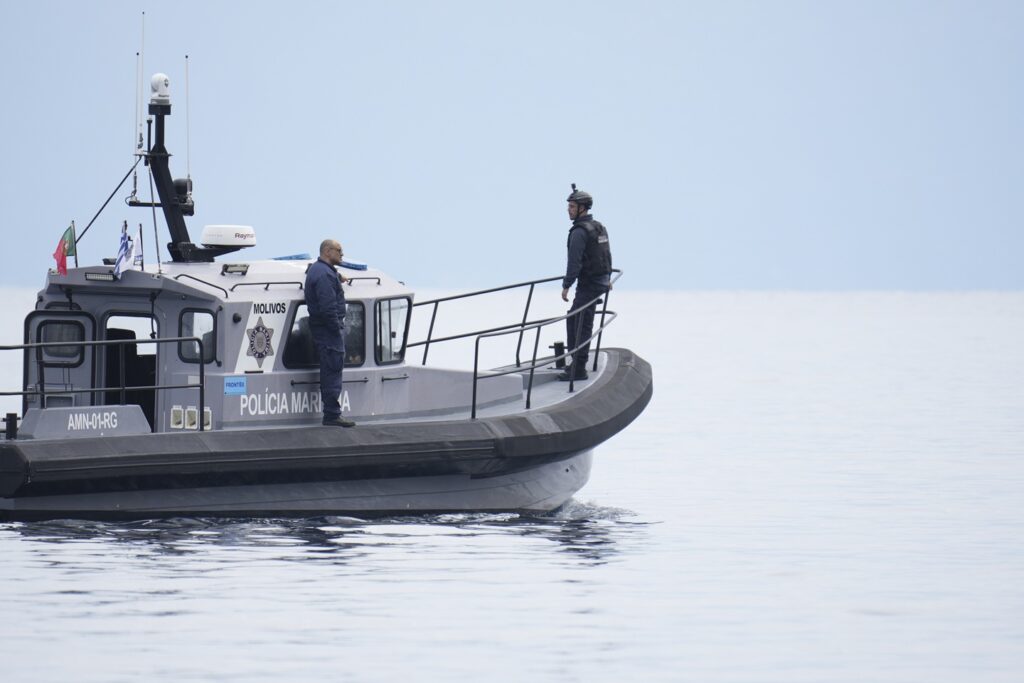
A Frontex vessel takes part in a search and rescue operation off the coast of the Greek island of Lesbos, April 2025. Photo: ANP / AP Photo / Panagiotis Balaskas
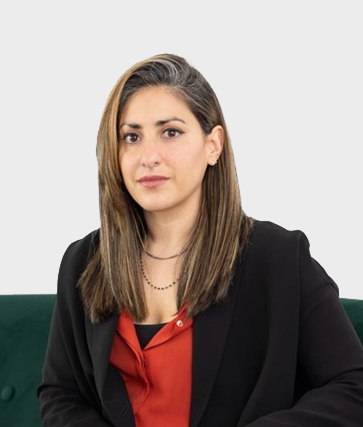
Mariana Gkliati, assistant professor of Migration and Asylum Law, researches human rights, migration and border control. She is known for her critical perspective on European border practices and on the role of Frontex, the EU’s border agency, which has repeatedly been accused of involvement in pushbacks (illegal expulsions) and other human rights violations.
Her work was recently recognised with the KNAW Early Career Award, a distinction for promising researchers at an early stage of their careers. ‘It is a special, historic recognition,’ she says. ‘Especially because it goes beyond research alone. It is also about who you are as a teacher, mentor and academic more broadly.’
She does not see the award as a personal achievement. ‘You never do research alone. Students and colleagues constantly bring me new ideas.’
An agency that is everywhere and almost nowhere to be seen
Gkliati has been studying the European Border and Coast Guard Agency Frontex for years and wrote her PhD on the subject at Leiden University. Frontex has since become the best-funded EU agency. It supports member states with border control, return operations and data collection, and it even has its own border guards. ‘They are involved in almost everything. That makes Frontex the central hub of European border policy,’ Gkliati explains.
But visibility does not automatically mean transparency. Even members of the European Parliament often cannot access crucial information. Documents on Frontex are withheld or heavily redacted. ‘That raises fundamental questions about democratic oversight. How do you supervise an organisation that is not transparent?’
Responsibility
At the core of Gkliati’s research is one central question: who is legally responsible when human rights are violated at the border? The answer turns out to be far from straightforward.
‘Responsibility seems obvious,’ she says. ‘If someone violates human rights, they should be held accountable. But at Europe’s external borders we see that organisations systematically manage to evade responsibility.’
That is because border management is no longer the task of a single authority. EU agencies, member states, private security companies and even non-EU countries are all involved in European migration policy. With so many actors, it becomes difficult to hold any one party legally accountable.
Legal structures also play a role. National courts cannot hold Frontex to account; only the European Court of Justice has jurisdiction, and that court offers little room for individual cases. ‘The result is a system in which violations are known, but there are gaps in accountability. And that undermines the rule of law.’
Why law is not neutral
Although Gkliati is a lawyer, she also draws on insights from the social and political sciences. ‘That interdisciplinarity is not a luxury, but a necessity when you are dealing with such complex social issues,’ she explains. ‘Law is often seen as an objective truth, but it is not. It is a social construct, shaped by political choices.’
Consider the outsourcing of border control, in which countries such as Egypt or Turkey are asked to stop migrants before they reach Europe’s borders. Or plans to transfer asylum seekers to Rwanda or Uganda.
‘These strategies stem from the political assumption that migration is a security threat. But that is not inevitable; it is a choice. Economic and sociological research often shows something very different.’ Immigration can bring benefits, such as knowledge and economic growth.
Once you realise that, you can question policy, she says—and that is urgently needed. ‘When you outsource violent policies to countries with weaker human rights protections, you increase the risks. And you shift responsibility to places where there is less visibility of what is happening.’
At the same time, Gkliati stresses that cooperation with non-EU countries is not inherently negative. ‘Working together on the root causes of migration, such as poverty or conflict, can be constructive. But that requires political choices that go beyond border control alone.’
The biggest misconception: passivity
Alongside her academic work, Gkliati actively takes part in the public debate on migration. What frustrates her most is not so much a lack of knowledge, but a passive attitude.
‘Many people think they know enough because they follow the news. But democracy requires active engagement,’ she says. ‘Political participation is not comfortable. Growth, both personal and societal, happens outside the comfort zone.’
Engagement does not always have to take the form of criticism. ‘We can also think about what is hopeful. About utopias. About stories, films or music that inspire us to imagine a different future. We need radical hope. Without imagination, nothing changes.’ Gkliati also brings this positive outlook into the classroom. ‘Otherwise it becomes too heavy to constantly deal with global problems.’
The worst thing we can do, she says, is remain silent. ‘Silence keeps systems in place. Public debate should be allowed to be uncomfortable. It doesn’t always have to be cosy.’
Advertentie.