Lessons for vulnerable Europe due to war in Iran: ‘The less oil and gas, the less geopolitical risk’
Switching from oil and gas to renewable energy. How hard can it be? In practice, we run into many obstacles. And who will pay the bill for the energy transition? Energy expert Rodrigo Vallejo explains where the shoe pinches for Europe.
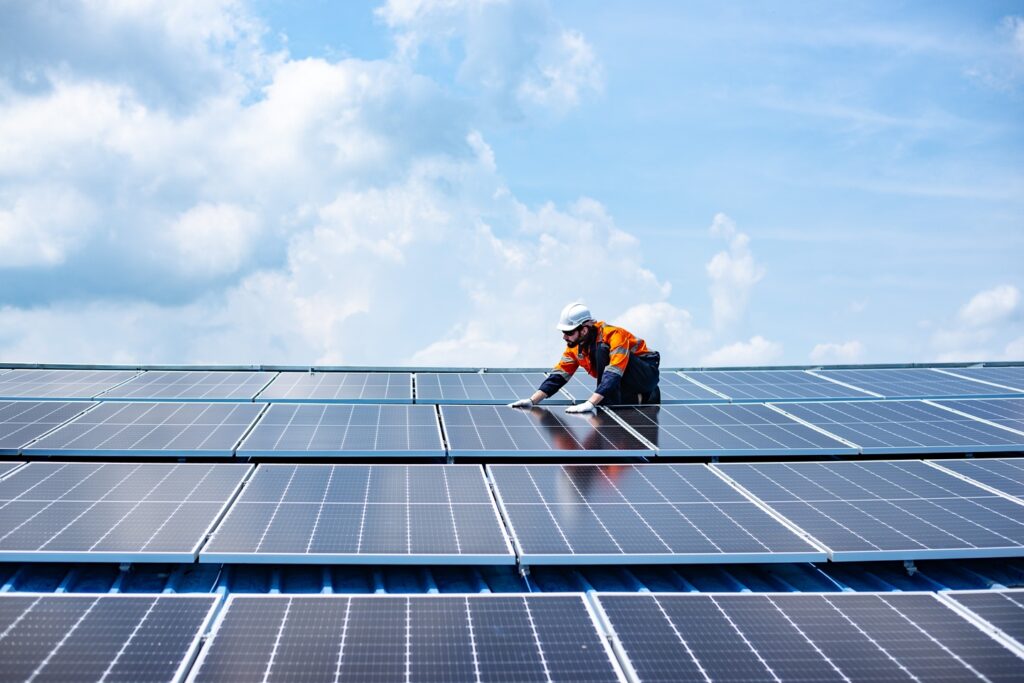
The war in Ukraine and the boycott of Russian oil and gas accelerated the transition from fossil to renewable energy. And since oil and gas prices have temporarily gone through the roof again due to the war with Iran, governments, citizens and companies are looking even more intensively for alternative energy sources. It suddenly pays off again to invest in heat pumps and electric cars. But why don’t we switch to green energy en masse?
Never waste a good crisis
‘The Iran war shows that fossil fuels are not just a climate problem; they also pose a geopolitical risk,” explains Rodrigo Vallejo. He is an associate professor of Energy Law and Regulation for the Digital and Green Transition.
“Any price shock to oil and gas makes domestic clean energy more attractive, which is why investors have invested a lot more money in renewable energy companies in recent months. This indicates a growing confidence that the market in that sector will grow.’
“The wars in Ukraine and Iran have exposed how vulnerable Europe is due to its dependence on foreign fossil energy,” Vallejo continues. ‘The lesson is simple: the less fossil energy Europe imports, the less geopolitical risk it imports.’
The power grid is full
But the transition to green energy does not only depend on available investments, Vallejo warns. The sector still faces a number of major challenges: ‘A major bottleneck is infrastructure: Europe is trying to electrify a 21st century economy on power grids designed for the 20th century.’
And the Netherlands is unwittingly at the forefront of that development. Many new solar farms, wind farms, even new homes and businesses are stuck in multi-year connection queues. There is simply not enough capacity on the grid. ‘There is no easy solution to this problem,’ Vallejo explains. ‘In addition to making smarter use of capacity, expanding the capacity of the electricity grids seems the logical way, but it takes time.’
It sounds paradoxical: at this time of year, we can consume more energy, because on sunny or windy days, the parks supply so much electricity that the price of electricity can even become negative. Then the power consumption is even free or you get money if you connect your electric car to the charging station. But feeding back self-generated electricity actually costs money.
There is a surplus of power at those times. That is why more storage capacity is needed in the form of batteries or applications such as green hydrogen, where sustainable electricity is converted into gas. Vallejo: ‘This requires a lot of investment, from startups to large companies, because storage requires an entire ecosystem.’
Energy poverty
In the current energy crisis, investments are paying off. But it is precisely the rich households that benefit most from the green subsidies. People with a lower income in a rented home with an old petrol car in front of the door hardly benefit from the dynamic energy prices and do pay the highest price at the pump.
At the same time, the number of families living in so-called ‘energy poverty’ is increasing sharply. Especially now that the net metering scheme for solar energy will expire in 2027, as a result of which owners of solar panels will no longer offset self-generated electricity against their consumption, and there may be a new tax on CO2 emissions.
People with a low income often have too little money or opportunities to invest in expensive, energy-efficient installations or electric cars. Students also run the risk of becoming victims of high energy bills again.
Cultural changes
Vallejo acknowledges that problem, but remains cautiously optimistic: ‘We are making progress, even if it is sometimes slow. We see this, for example, in the sales figures of electric vehicles. Last year, one in five cars sold in Europe was electric, compared to just two percent in 2019. In less than ten years, the share of EVs has increased almost tenfold.’
Vallejo: ‘Much more can and must be done. Electrifying cars is important, but we shouldn’t limit clean mobility to private car ownership. Sustainable public transport, shared mobility and cleaner fuels for aviation and shipping are part of the same transition.’
Short term
Earlier this month, researcher Dongchen He received his PhD from Tilburg University on electricity policy in the energy transition. In her dissertation, He argues in favour of giving households more freedom of choice in subsidies. Because people with lower incomes mainly prefer financial incentives that make money in the short term and turn down investments in the long term.
Vallejo sees a role for the government in making green choices: ‘Short-term thinking is one of the biggest threats in this area. The transition requires long-term policy certainty, but households are living with short-term budgets. Good policy should do both: protect people now and help them escape dependence on fossil fuels over time.’
‘This indicates that the transition is not only about enabling technological innovation. It’s also about phasing out fossil fuels in a fair way – for low incomes, for poor regions and households whose lives still depend on oil and gas,” Vallejo stresses.
Bright spots
Despite all the energy crises, Vallejo also sees bright spots: ‘There is real progress: renewable energy now supplies almost half of the EU’s electricity, in addition to about a quarter of total energy consumption in Europe. But electricity is only part of the story. Heating, transport and industry still need to electrify much faster.’
Nevertheless, Vallejo emphasizes: ‘If Europe wants to go faster after Ukraine and Hormuz, we should not only focus on renewable energy in the next phase. Above all, Europe must also invest in new infrastructure: networks and storage, and rules that promote a sustainable lifestyle.’
Congress on climate and energy transitions
How do we shape the climate and energy transition in a way that is not only sustainable and affordable but also fair? That is the central question at the conference ‘Powering Change Together’ organised by the Academic Collaborative Centre for Climate and Energy on Thursday 25 and Friday 26 June.
Congress on climate and energy transitions
Advertenties.