Diversity requires more than a rainbow bench
Is the university inclusive enough? ‘The emphasis seems to be on reducing differences between men and women,’ write Jessie Hillekens and Kevin van Schie. But what about gender identity, mental abilities and first-generation students?

The rainbow staircase leading to the university library is no more. Now, a little further away, there is a new bench. Not just any bench, but a rainbow bench. Smaller, quieter, lower to the ground. Where you could once rise, both literally and figuratively, what remains now is something you can mainly sit on. Or walk past.
Perhaps that is not a problem. Things change, campuses change, and not every physical alteration has to mean a loss. In fact, the stickers on the rainbow staircase were removed for reasons of sustainability; not a bad thing in itself.
The point, then, is not the bench itself, but the role such a symbol plays within the university’s broader diversity policy. When a prominent symbol makes way for something smaller and less conspicuous, the question arises of how this relates to the broader choices an organisation makes.
The university describes it as a bottom-up initiative. That sounds appealing: a movement that emerges from students and staff themselves, supported by the community. But bottom-up only becomes meaningful when there is also a ‘top’ that connects with it. It is therefore not just about how much room there is for initiatives of this kind, but also about how they fit into the broader choices the university makes regarding diversity and inclusion.
Organisations can actively encourage diversity, largely ignore it or discourage it. Many organisations opt for a seemingly neutral approach in which everyone (students and staff in this case) is primarily seen as an individual.
That feels intuitively right and sounds logical, but research shows that this approach often actually perpetuates existing inequality because structural barriers are not removed. It is precisely organisations that actively value and encourage diversity that reduce this inequality.
When we look at the university’s current diversity policy, the emphasis seems to be mainly on reducing differences between men and women. That is an important ambition, but a broad vision of diversity also requires attention to other dimensions that currently receive relatively less attention.
This is a rotating column from the Tilburg Young Academy (TYA). Each month, a different TYA member highlights developments in the academic world.
After all, diversity also encompasses, among other things, migration and socioeconomic background, sexual orientation and broader gender identity, physical and mental abilities, and the position of first-generation students.
For all these forms of diversity, scientific research paints a very consistent picture: valuing and promoting diversity has significant positive consequences for both individuals and the organisation as a whole. For individual students and staff, it can contribute to a sense of belonging and being able to be themselves, resulting in increased motivation, self-confidence, and academic and work performance.
For the organisation, an inclusive diversity policy can contribute to greater efficiency, less dropout and fewer burnout symptoms, and more creativity, because more diverse teams are more likely to think outside the box.
However, these benefits do not arise simply by installing a visible symbol such as a rainbow bench. After all, this rainbow bench, too, will fade, wear out and eventually disappear. What matters more is what remains when the symbols have disappeared. If diversity is still visible in the choices the university makes, perhaps the bench has done exactly what it was intended to do.
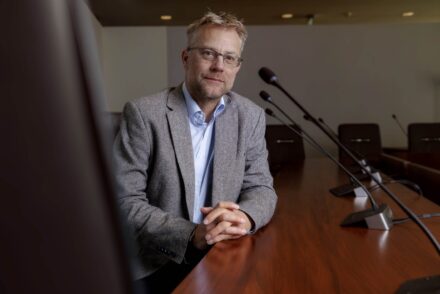
Jessie Hillekens is an assistant professor in the Department of Developmental Psychology. Her research focuses on social inequality, diversity and inclusion.
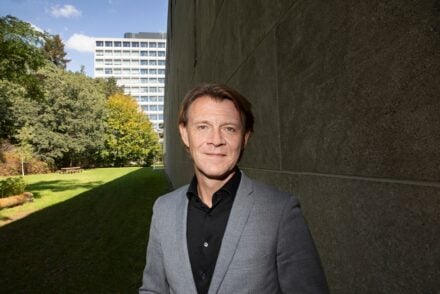
Kevin van Schie is an assistant professor in the Department of Medical and Clinical Psychology. He studies how people cope with emotionally distressing experiences, from trauma to climate change.
Advertenties.