Children’s Author Paul van Loon: ‘You Must Always Give Children Hope’
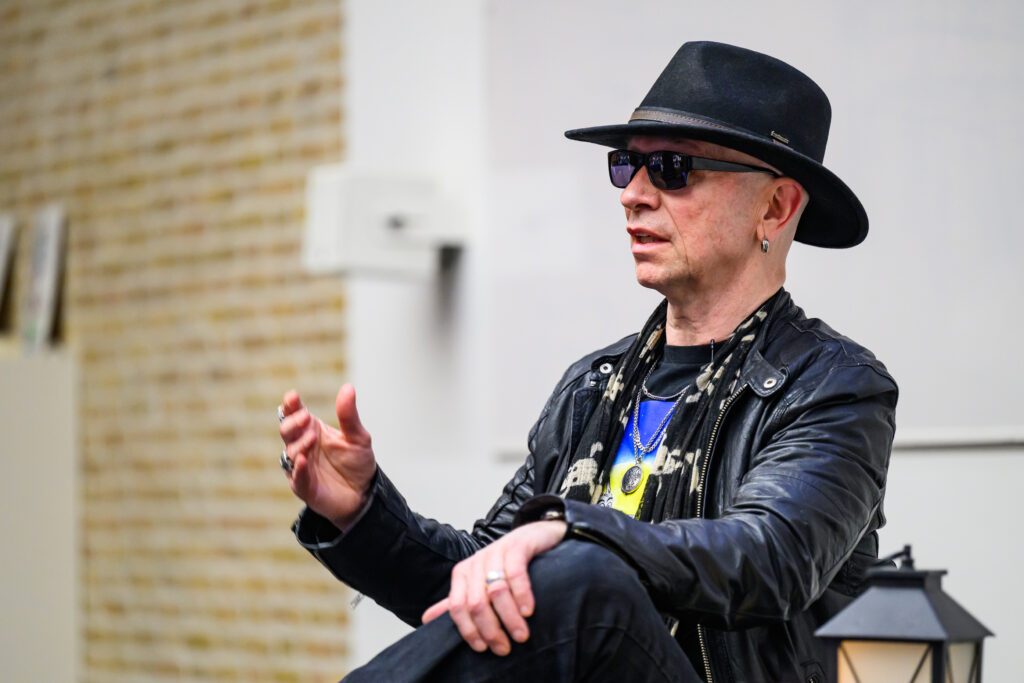
With classics such as Dolfje Weerwolfje and De Griezelbus, Paul van Loon has become one of the best-known children’s authors in the Netherlands. During Night University, he tells Univers why children’s literature is often underestimated, what science can learn from fiction, and why he will never write a book for adults.
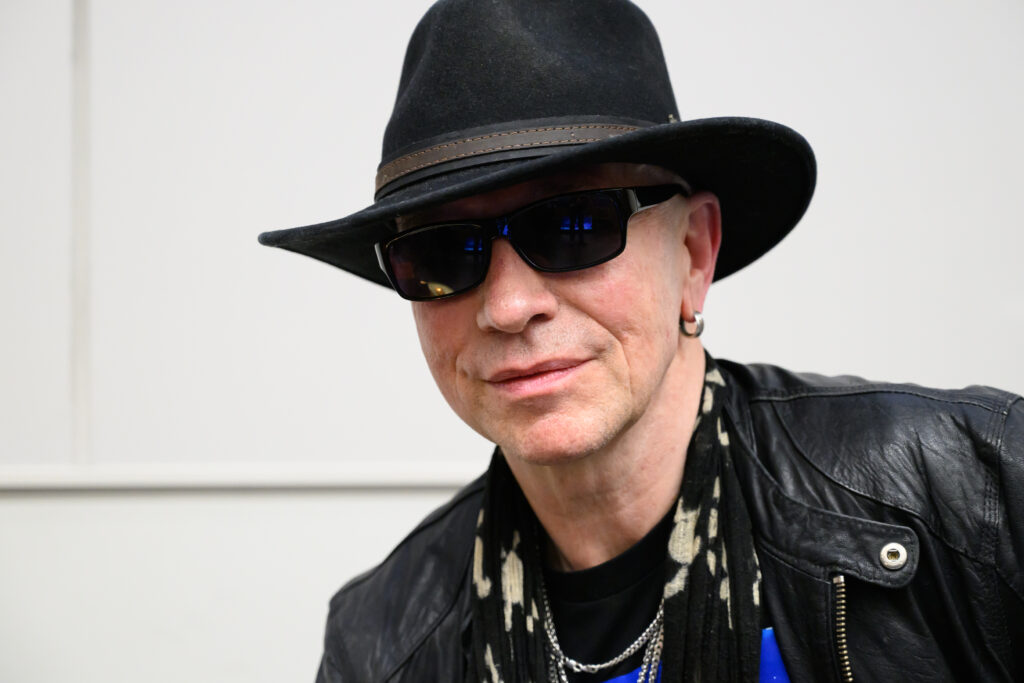
‘I stopped counting, but it must be around 150,’ Paul van Loon says to a packed auditorium in the Goossens Building. ‘And I still have plenty of ideas for new books.’ Van Loon is one of the main guests at Night University, Tilburg University’s annual science festival. Together with youth literature scholar Suzanne van der Beek, he explores the “spooky” science behind children’s books and young adult literature.
It is not only the number of attendees that shows how popular Van Loon is; their ages also reveal that during his 43-year writing career he has managed to captivate multiple generations of readers. During his Night Talk, young and old(er) alike hang on his every word. Van der Beek says: ‘Children’s books are almost never written solely for children.’
‘You are my great childhood hero,’ an enthusiastic student declares. A little later, the author signs books for a 74-year-old reader. ‘The world of children’s books is a cheerful world, completely different from the adult world,’ Van Loon says when he joins Univers for an interview afterwards. ‘People sometimes ask me whether I’m ever going to write a book for adults.’ Firmly: ‘Never! I almost find that an insulting question. As if writing children’s books means you’re working on some kind of side project.’
Speaking of side projects, Tilburg University happens to be the only university with a Master’s programme in Children’s Literature.
‘It’s remarkable that the programme exists and that it is allowed to exist. I hope it’s a programme that will continue to grow in the future.’
Should adults, especially nowadays, read more children’s and young adult books?
‘That would certainly be wise. Adults decide everything in this world. Just look at all the wars currently taking place — they’re all driven by old, grey-haired men. When you read a children’s book, you enter a completely different environment. It broadens your perspective and shows you that there are other worlds too, far more beautiful ones.’
So children’s books can function as a form of escapism?
‘Undoubtedly. In any case, it’s badly needed when you look at everything happening in the world. I would definitely recommend it: read children’s books.’
Adults sometimes dismiss children’s literature as inferior or “just for kids.” What do you think of that?
‘First of all, I hope they actually open a children’s book and think: this is a real book. Years of hard work go into a book like that. Not just from the writer, but from the illustrator as well.
‘In that sense, children’s and young adult books are true works of art — and much more beautiful than books for adults. Dutch literature for adults, especially, is something you should read if you want to become depressed. All that misery…’
Universities value critical and analytical thinking, while fiction leaves room for imagination and the unexplainable. What can science learn from fiction?
‘That not everything can be captured in formulas. Once, Radboud University asked me to write a book for them. I started on it, but after a week I returned the assignment.
‘Because in line six this had to happen, line ten had to be ‘built through emotion’, and so on. It drove me crazy. I thought: I can’t write a book like this. Science is tied to certain laws about how things are supposed to unfold. Writing, of course, isn’t. I practically became allergic to having to write that way.’
During the Night Talk, you said you strongly oppose adults frightening children, partly because the relationship is inherently unequal. As a writer of scary stories, how do you know how far you can go?
‘I feel that instinctively; I don’t have any rules or laws for it. You have to give children something that makes them enjoy reading and want to keep reading. It’s perfectly fine if they find it a little scary or exciting. I loved that myself as a child.
‘If a story becomes too frightening, a child has the power to close the book and continue later. That makes it manageable. But frightening children deliberately is terrible — you simply shouldn’t do it. Children have no power in relation to adults, which is why I’m strongly against it.’
You’ve been writing for 43 years. Have you seen children’s imagination change during that time?
‘Not really. When I sign books, I still see the same six- or seven-year-old faces standing in front of me holding a copy of Dolfje Weerwolfje. They’re the same children as thirty years ago.’ He laughs. ‘Only I’m getting older, it seems — the children haven’t changed one bit.’
Books now face a lot of competition from screens and devices. Do you take that into account?
‘No, and I think that’s precisely why Dolfje Weerwolfje has lasted so long. Devices and screens are deliberately absent from those books. As soon as you include them, you write a time-bound book that quickly becomes dated because of technological developments.
‘In that sense, Dolfje could just as easily have been written today instead of thirty years ago. Besides, children already deal with screens enough in daily life. They don’t need them in books as well.’
What can students and researchers learn from children’s books when it comes to unnecessarily complicated language?
‘That it’s all about the essence — especially if you want to hold the reader’s attention. If you can write a sentence in eight words, then don’t turn it into one of twelve or twenty. I always try to write as concisely and clearly as possible myself.’
During the Night Talk, you discussed old children’s stories that end badly or even gruesomely. Has the function of fairy tales or scary stories changed over the years?
‘Fairy tales still have an educational function about good and evil. In Hansel and Gretel, for example, the children are not allowed to leave the path. There’s obviously a lesson in that, even if toddlers may not recognize it yet.
‘But nowadays, children’s stories almost never end badly anymore. You must always give children hope. I think that’s incredibly important. Children still have such a long road ahead of them in life.
‘Adults sometimes come up to me and say that Dolfje saved their childhood. I didn’t realize my books had that kind of impact until grown people stood at my signing table almost in tears.
‘You see, some children grow up in terrible, violent home situations where they constantly feel afraid. And then they can escape into a book like Dolfje Weerwolfje. Unfortunately, I’ve heard that many times. And that is why you must always give children hope.’
Paul van Loon (1955) is one of the Netherlands’ most popular children’s authors. Among his works are Dolfje Weerwolfje, De Griezelbus, Foeksia de miniheks, and Raveleijn. Van Loon describes his books as “grumor” stories: tales that are both funny and frightening. Many of his books have been adapted into films. He has won the Dutch Children’s Jury Award eleven times.
Advertenties.